
Why it matters
The same monetary difference can feel different depending on whether it is framed as a gain or a loss. Reference points can therefore influence decisions even when final outcomes match.
A worked example
A £20 price increase feels more painful than a £20 discount feels pleasing, even though the amounts match. This can affect willingness to change a plan.
Illustrative example · simplified assumptionsA common mistake
Using loss aversion as another name for all risk aversion.
Where the idea needs care
This is not a universal fixed multiplier, and reference points differ. It is distinct from dislike of uncertain outcomes.
Apply the idea
Explain this concept using a different example from your spending, work, business or a policy debate. State what stays fixed and what could change the result.
See the supporting infographic
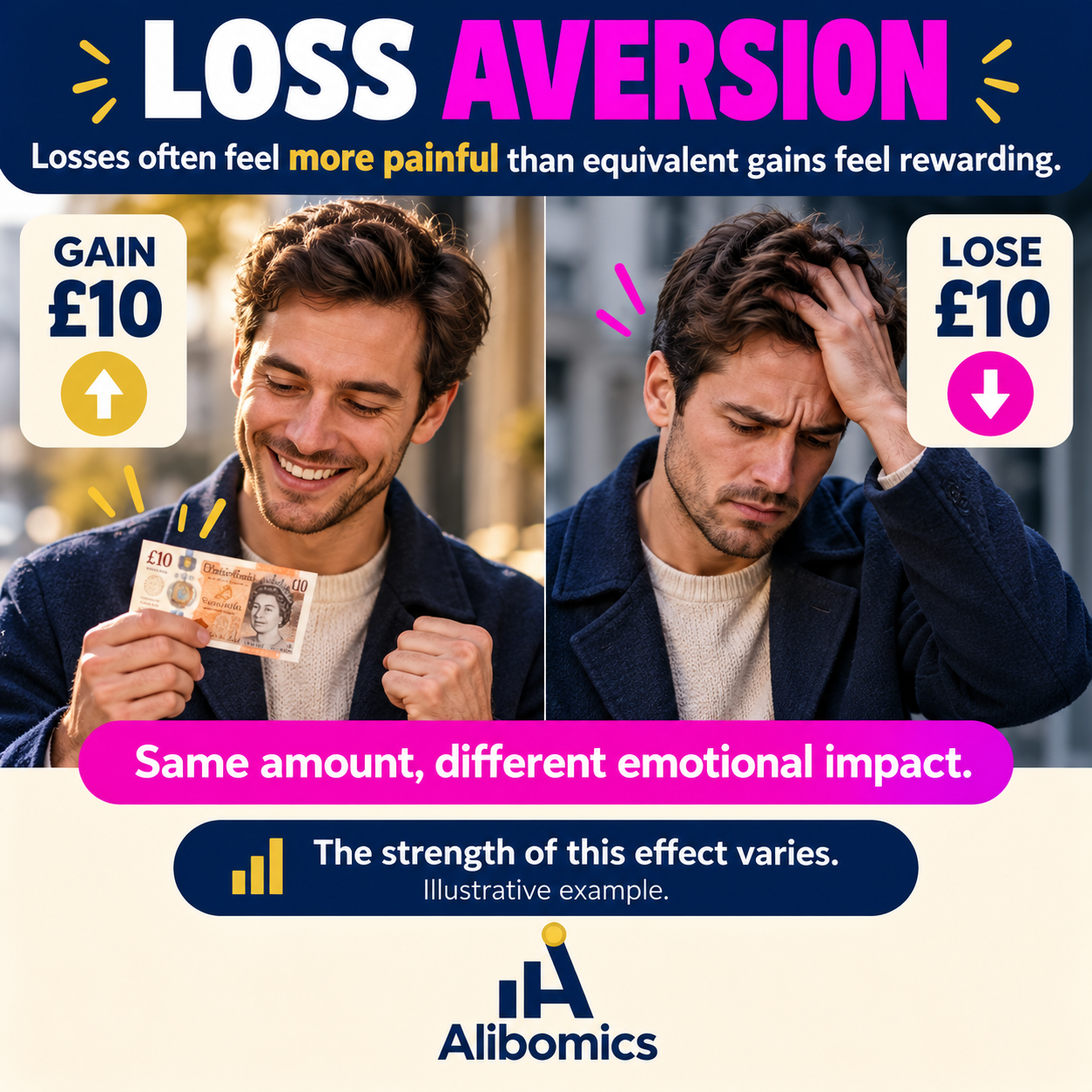
The written explanation above is the main lesson. This image offers another way to remember it.
Sources and further study
Examples and explanations by Alibomics. Numeric illustrations are not current market quotations.