
Why it matters
If people can benefit without paying and additional users do not consume the good, voluntary provision faces a different incentive problem from ordinary private sales.
A worked example
Once a flood-warning broadcast is available, another resident hearing it does not normally reduce its usefulness to others. Excluding listeners can be difficult.
Illustrative example · simplified assumptionsA common mistake
Assuming every publicly funded service is a pure public good.
Where the idea needs care
Public goods are defined by these characteristics, not simply by government provision. Congestion and exclusion can change the classification.
Apply the idea
Explain this concept using a different example from your spending, work, business or a policy debate. State what stays fixed and what could change the result.
See the supporting infographic
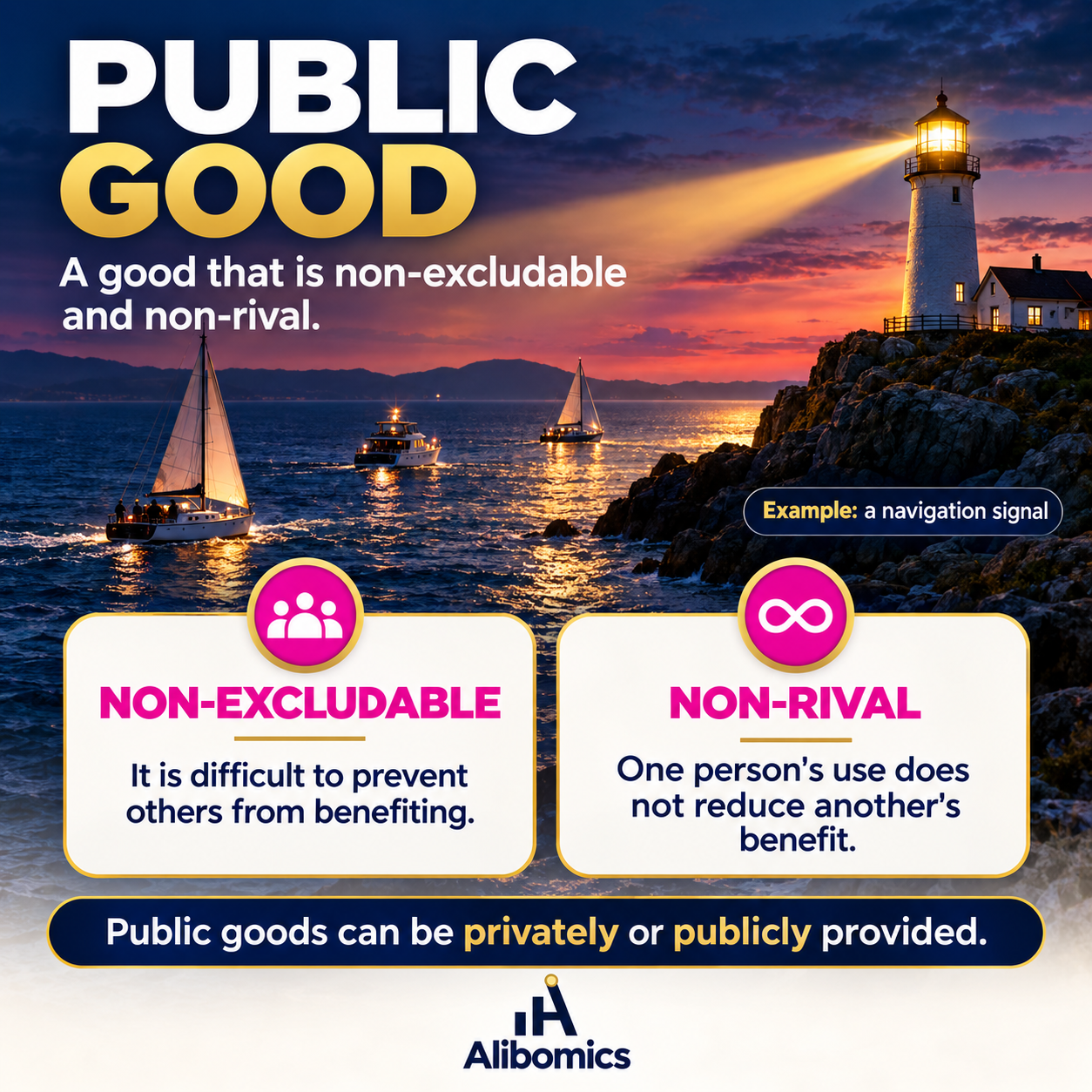
The written explanation above is the main lesson. This image offers another way to remember it.
Sources and further study
Examples and explanations by Alibomics. Numeric illustrations are not current market quotations.